PDU was born for moments like this. After months of development, I finally got the call I'd been waiting for—a real-world disaster recovery scenario that would push PDU to its absolute limits. What happened next is a story I'm proud to share.
The Nightmare Scenario
A client reached out in desperation. Their PostgreSQL database—1.5TB of critical data running version 16.7 with PostGIS 3.2.8 spatial extensions—had suffered catastrophic disk corruption.
The situation was dire:
- Data dictionary corrupted by bad disk sectors
- Database completely inaccessible—wouldn't even start
- Backups? Useless.—also corrupted or outdated
Every DBA's worst nightmare had become reality. The clock was ticking, and business operations were at a standstill.
PDU Enters the Battle
Phase 1: Data Initialization
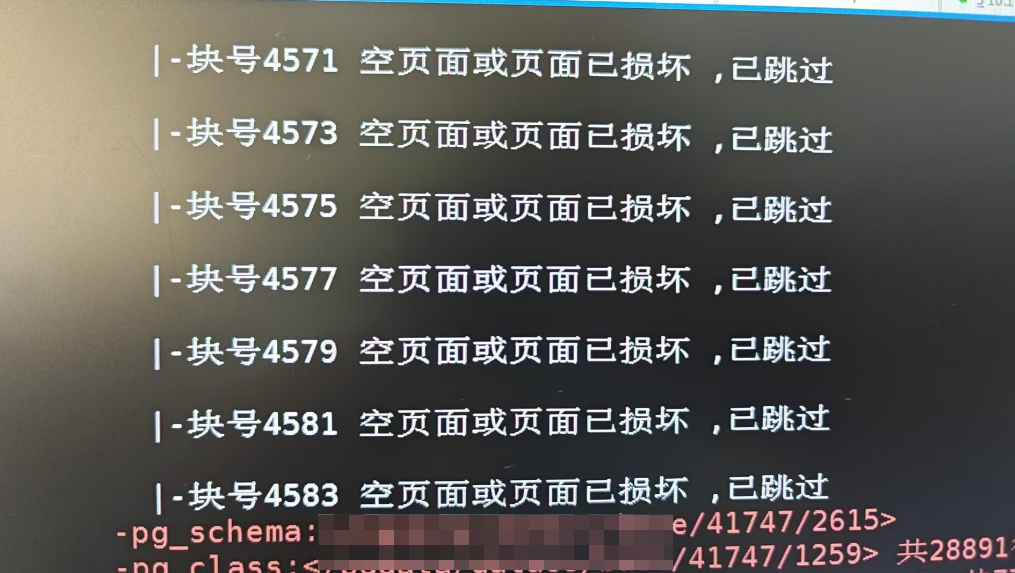
The first scan confirmed our fears—system tables were riddled with page corruption errors. But here's where PDU shines: instead of giving up at the first sign of damage, it intelligently skips corrupted pages and continues extracting whatever intact data dictionary information remains.
When Past Success Breeds False Confidence
I'd already adapted PDU to handle PostGIS 3.5.2 data types. "This will be straightforward," I thought. "Just a matter of time."
I was wrong.
Field reports started flooding in: frequent core dumps and GIS parsing failures everywhere.



How could this be? Were the differences between PostGIS versions really this significant?
With no time to investigate properly, I made a tactical decision: disable GIS data type parsing temporarily and implement checkpoint resumption for the schema unload process.
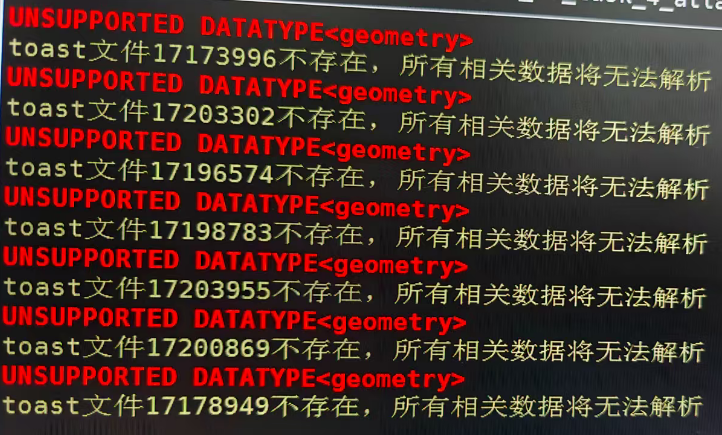
I knew errors would continue interrupting the extraction mid-stream. The critical requirement was ensuring PDU could resume from the failed table rather than starting over from scratch each time.
Racing Against the Clock: Root Cause Analysis
Between extraction cycles, I dove into the code. The culprit? A seemingly innocent optimization I'd made earlier.
In the detoast_attr function for decompressing GIS fields, I had commented out the VARATT_IS_EXTERNAL_ONDISK logic. This meant PDU wasn't fetching the actual GIS data from TOAST tables—it was trying to parse TOAST pointers as if they were actual geometry data.
Of course that would fail.
The fix was straightforward: restore the TOAST resolution code path. While I was at it, I discovered the same bug affected JSONB columns too—fixed both in one shot.
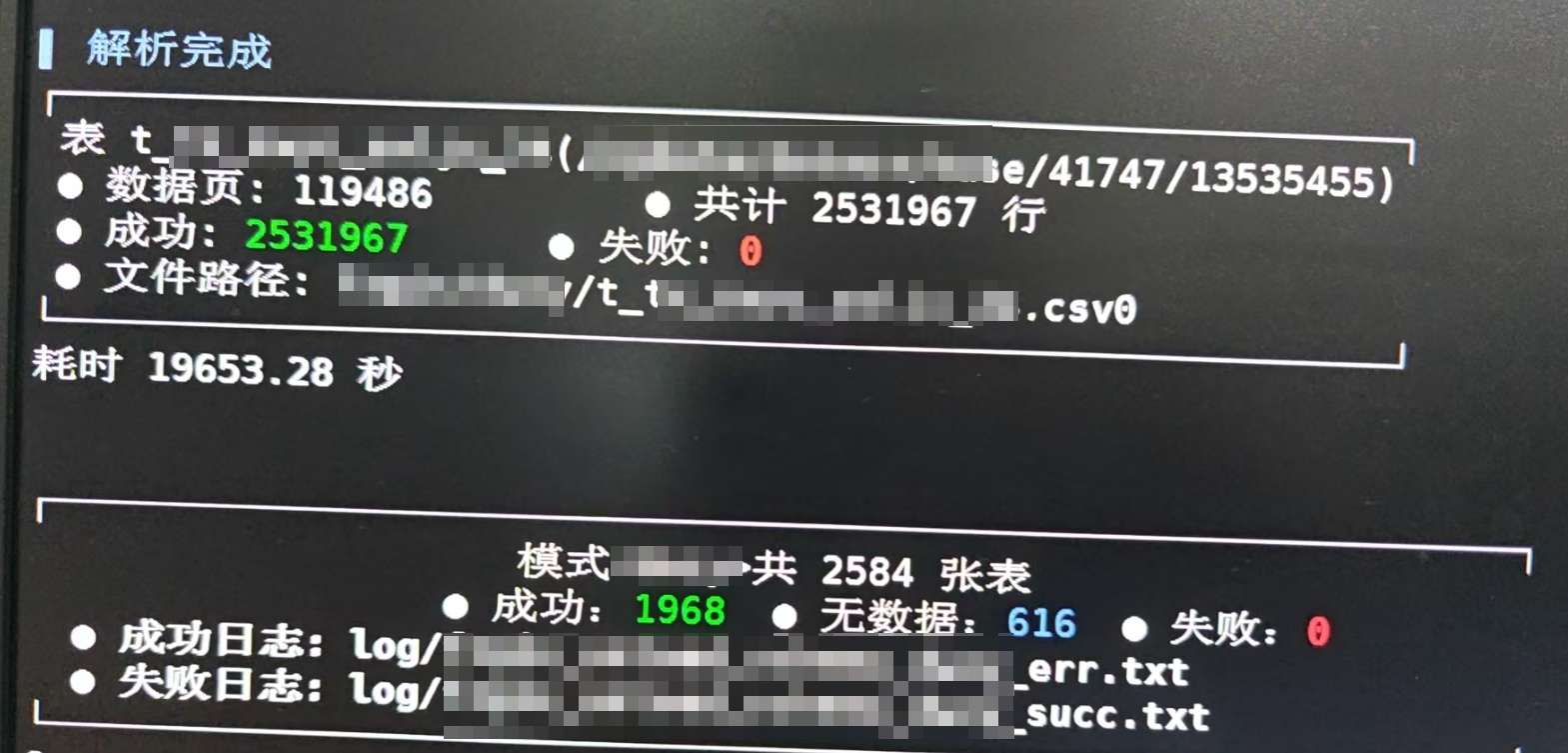
Finally, data parsing stabilized. Now it was just a waiting game.
Trust, But Verify: Validating Object Counts
The client had a month-old backup database that, while outdated, provided a valuable reference point. They wanted proof that PDU wasn't missing tables in the extraction process.
The Numbers Don't Lie
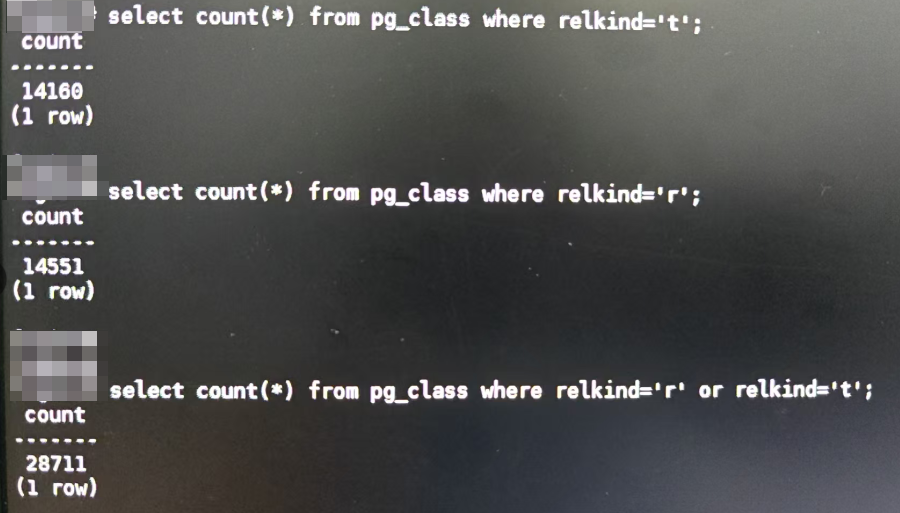
First, we queried the backup database:
- Table objects:
14,551 - TOAST objects:
14,160 - Total:
28,711
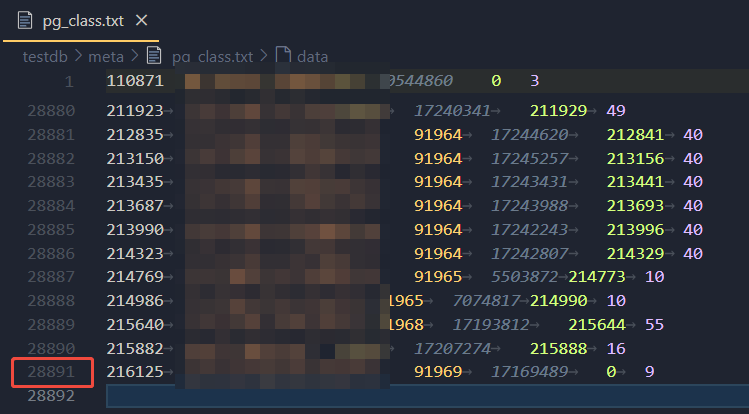
Now, what did PDU find in the corrupted database's pg_class?
Total objects: 28,891
Breaking it down further with all system schemas included:
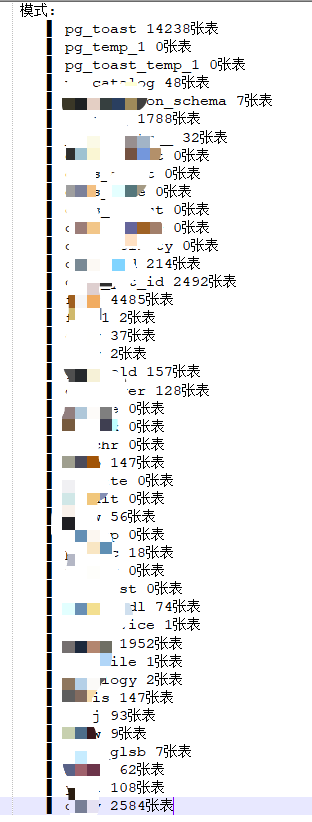
The first row shows 14,238 TOAST objects. Simple math: 28,891 - 14,238 = 14,653 table objects.
Adding up all non-TOAST rows? Exactly 14,653. Perfect match.
The Verdict
| Metric | Current DB | Month-Old Backup |
|---|---|---|
| Total Objects | 28,891 | 28,711 |
| Tables | 14,653 | 14,551 |
| TOAST Objects | 14,238 | 14,160 |
The corrupted database had more objects than the backup—exactly what you'd expect from a month of active use. Every schema's table count added up correctly. Zero missing tables.
PDU's parsing accuracy was confirmed.
The Final Push
Recovery Complete
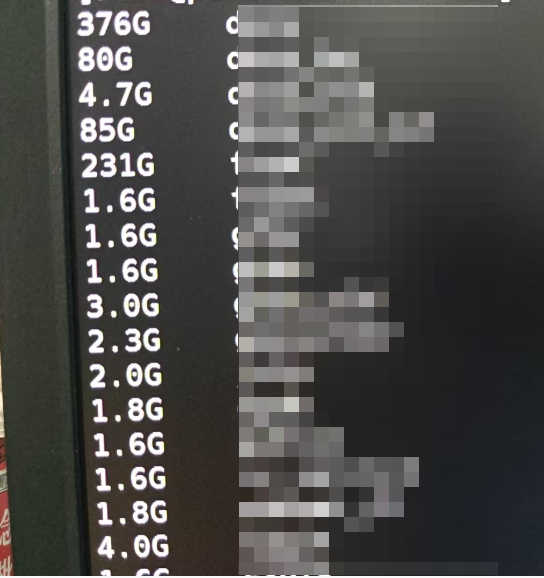
The client's server hardware was thankfully robust. With PDU running at full parallel capacity, we extracted the entire dataset in record time and restored it to a fresh instance.
Were there hiccups during import? A few encoding issues and escape sequence errors, but nothing we couldn't handle on the fly.
Reflections from the Trenches
-
The gap between development and production is real. I built PDU with passion and hope, dreaming of the day it would face a real crisis. When that day came, I learned just how brutal production environments can be. I barely slept—every notification sound made my heart race. Thank goodness it was a weekend.
-
Battle-tested confidence is different. This wasn't just recovering simple dates and numbers. We wrestled with complex struct types, obscure data formats, and edge cases that nearly made my head explode. Coming out the other side? That's a confidence boost no amount of testing can provide.
-
One final thought: PDU absolutely crushed it.
Sometimes the tools we build surprise even us.
Further Reading
For a decision guide that separates backup restore and PITR from physical salvage, see PostgreSQL Data Recovery for Corrupted or Offline Databases.
Continue with PDU
The article explains the problem; the PDU homepage presents the tool, workflow, and real recovery scenarios.